Photo Credits: Dr. Loretta W. Harvey
Scientific Name: Spiraea spp.
Common Name: Spirea, Meadowsweet, or Steeplebushes
Type: Deciduous shrub
Family: Rosaceae (Rose Family)
Native Range: Northern Hemisphere
USDA Zone: 4–8
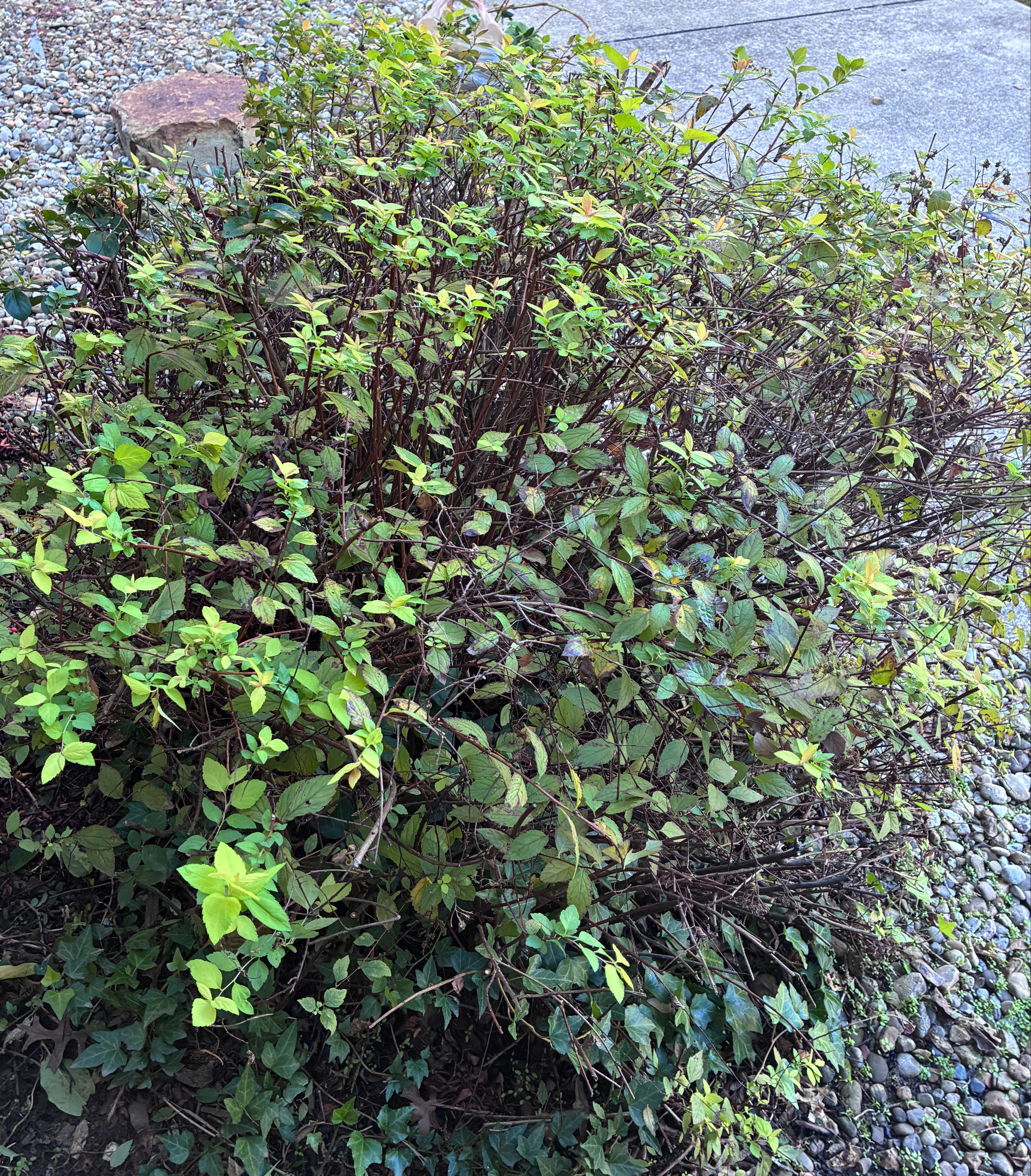
Height: 1 to 8 feet
Spread: 2 to 10 feet
Bloom Time: May–August
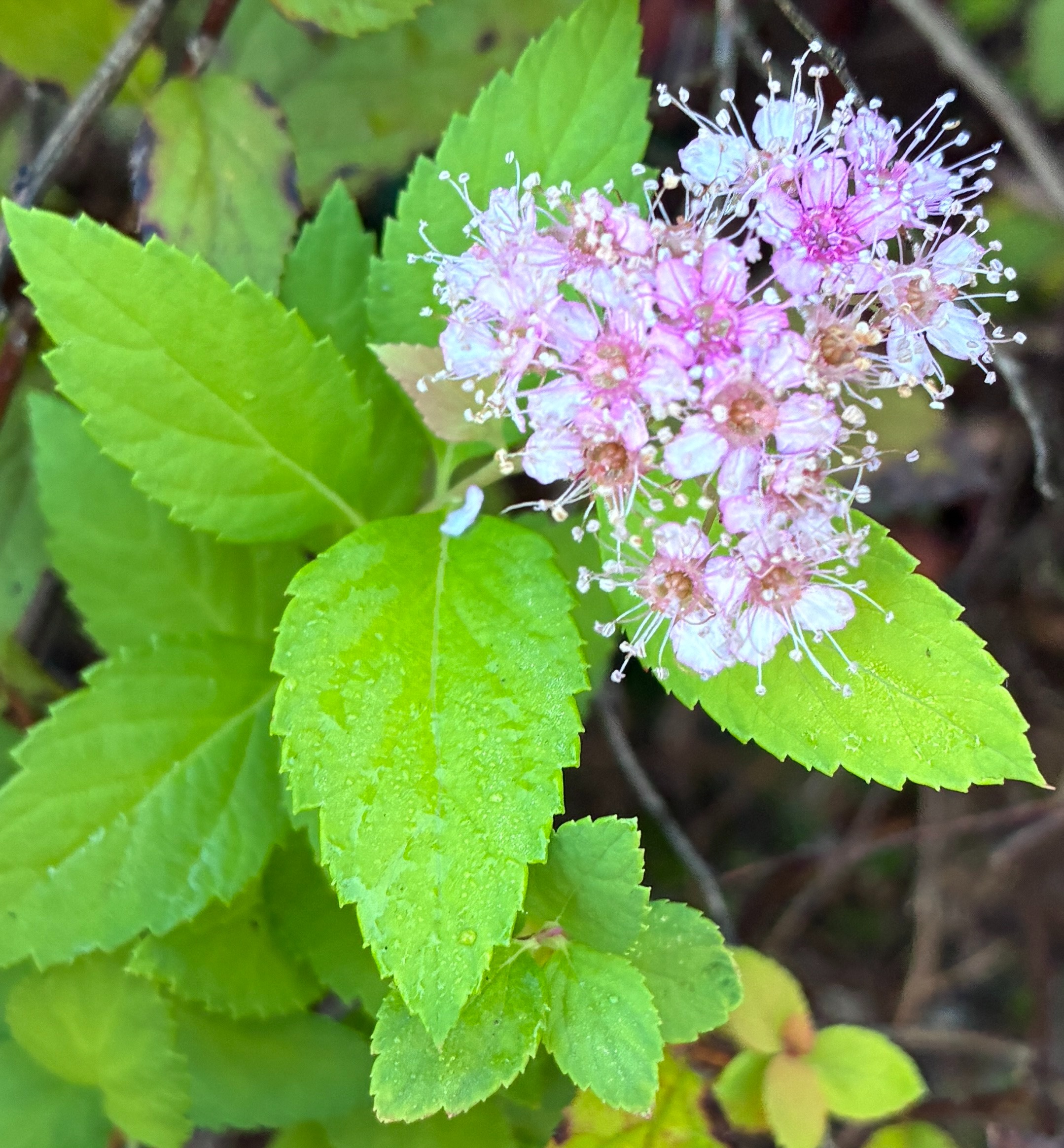
Bloom Description: Tiny, lacy, five-petaled flowers clustered in dense clusters, White, pink, red, or mauve.
Sun: Full sun
Water: Keep newly planted shrubs consistently moist. Established plants are drought-tolerant.
Maintenance: Low maintenance and easy to grow. Spring-bloomers are pruned immediately after flowering; summer-bloomers are pruned in late winter/early spring.
Leaf Type/Shape: Simple, alternate, and usually finely toothed (serrated) or occasionally lobed. Foliage colors range from green, blue-green, chartreuse, to gold.
Attracts: Butterflies, bees, and other insect pollinators.
Other Info: Used extensively in landscapes as specimen plants, hedges, foundation plantings, and borders. Known for providing attractive foliage and flower color across multiple seasons.
Tolerate: Deer-resistant and rabbit-resistant, tolerates poor soil, cold, heat, humidity, drought (once established).
Invasive: The species Spiraea japonica (Japanese spirea) can be an aggressive self-seeder and is considered invasive in certain areas of the eastern U.S. Newer cultivars have been bred to be sterile (seedless) to address this.
Climate: Spirea thrives in temperate climates due to its wide range of cold hardiness. It is adaptable to varying environmental conditions, including poor soils and fluctuating temperatures, contributing to its popularity in diverse garden settings.
Noteworthy Characteristics: Three-Season Interest- Offers attractive flowers in spring or summer, vibrant foliage color throughout the growing season, and often showy fall color (shades of gold, orange, red, or purple). The genus name Spiraea is historically linked to the discovery of salicylic acid (a component of aspirin) from the related plant Filipendula ulmaria, which was once classified in the Spiraea genus. The word "aspirin" is derived from the German word Spirsäure (spiraea acid).
Problems: Pests- Aphids, leaf rollers, and scale. Diseases- Leaf spot, powdery mildew, and root rot (especially in heavy, wet soils).
Economic Uses: Horticulture-Primarily used as ornamental landscape shrubs for their showy flowers and colorful foliage. They are a staple of the nursery industry, with numerous cultivars developed for specific sizes, flower colors, and non-invasive habits. Traditional Medicine- Some native species, such as S. betulifolia, have been historically used by Native American groups for various medicinal purposes, including teas for stomach issues. Crafts-Certain species were used by Native Americans for making brooms.
Donated by:
In memory of:
Arboretum Catalog Number: 0013
Photo Credits: Dr. Loretta W. Harvey