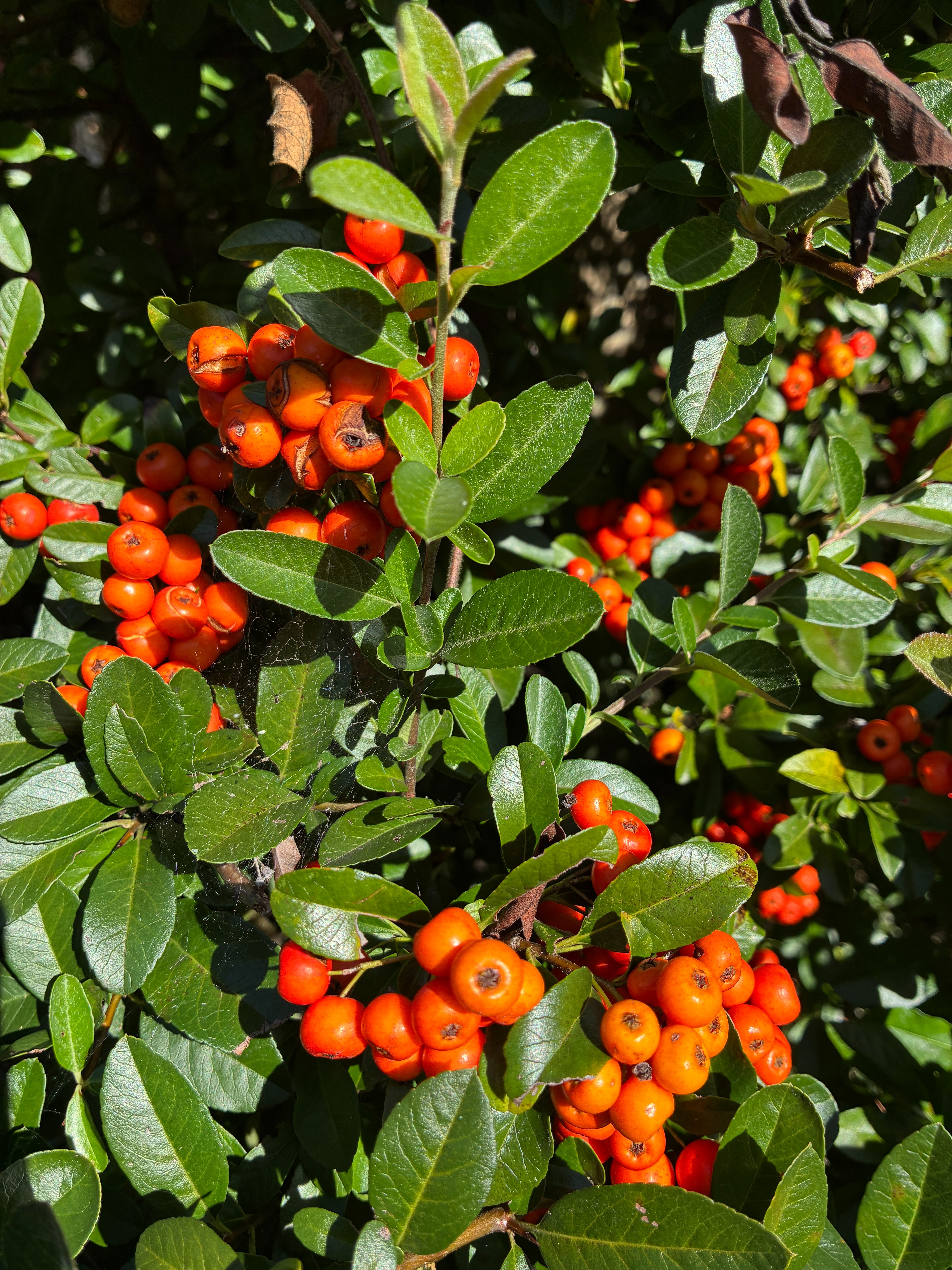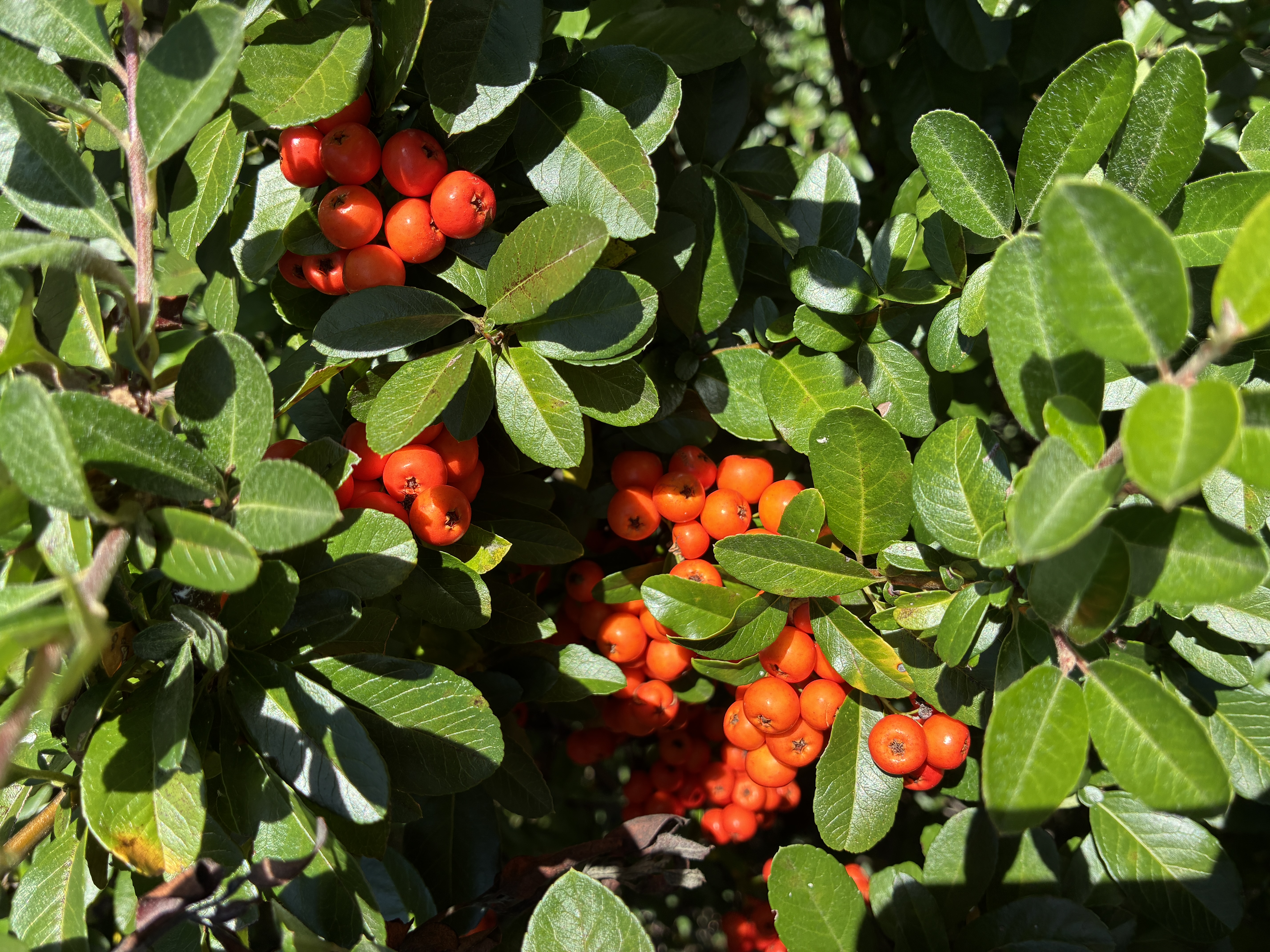
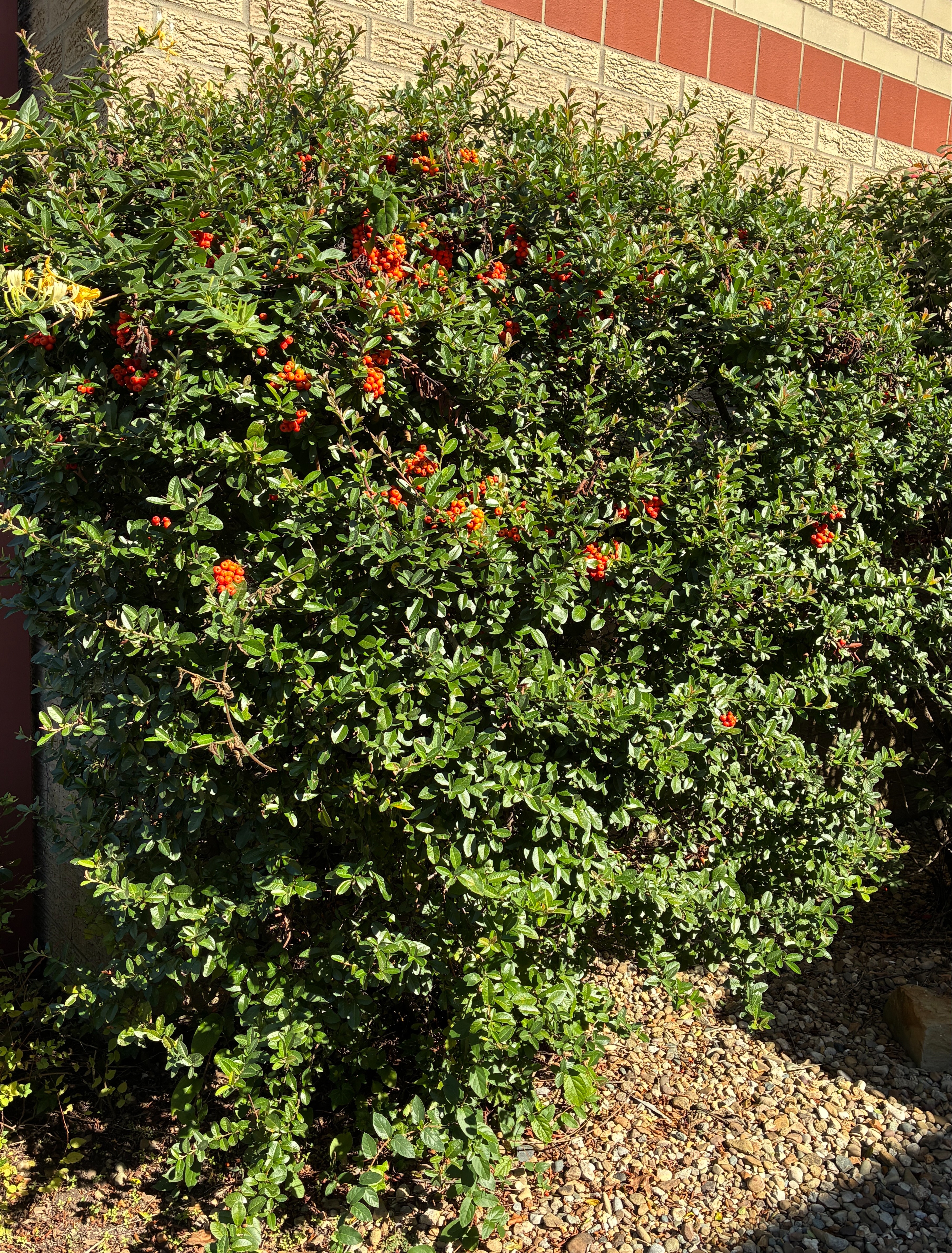
Photo Credits: Dr. Loretta W. Harvey
Scientific Name: Pyracantha spp.
Common Name: Firethorn, Scarlet Firethorn
Type: Semi-evergreen shrub
Family: Rosaceae (Rose Family)
Native Range: Southwest Europe to Southeast Asia
USDA Zone: 6 to 9
Height: 10 to 15 feet
Spread: 10 to 15 feet
Bloom Time: May to June
Bloom Description: Small, 5-petaled white flowers in clusters.
Sun: Full sun to partial shade
Water: Dry to medium moisture
Maintenance: Low to moderate. Requires regular pruning to maintain a tidy shape, caution due to sharp thorns.
Leaf Type/Shape: Simple, alternate, glossy dark green, narrow-elliptical to oval. Margins are often serrated. Foliage is retained year-round in milder climates.
Attracts: Birds (which eat and disperse the fruit) and pollinators (when flowering).
Other Info:
Tolerate: Drought tolerant, clay soils, various soil pH levels (acidic to neutral)
Invasive: Considered invasive in some parts of the United States (California and Georgia) and Australia.
Climate: USDA Zones 6 to 9, Drought tolerant, clay soils, various soil pH levels
Noteworthy Characteristics: Spectacular Fruit Display- Produces a heavy crop of red, orange, or yellow berries (pomes) in the fall that often persist well into winter. Thorns-Stems possess long, very sharp thorns, making it an excellent security barrier or hedge. Can be grown as a shrub, a hedge, or trained flat against a wall.
Problems: Susceptible to diseases like fireblight and pyracantha scab (which disfigures fruit). Common insect pests include aphids, lacebug, and spider mites.
Economic Uses: Primarily grown as an ornamental for its attractive flowers, dense foliage, and persistent berries. The dense, thorny growth is used for hedge, and screening. The fruit is edible but unpalatable raw.
Donated by:
In memory of:
Arboretum Catalog Number: 0014
Photo Credits: Dr. Loretta W. Harvey