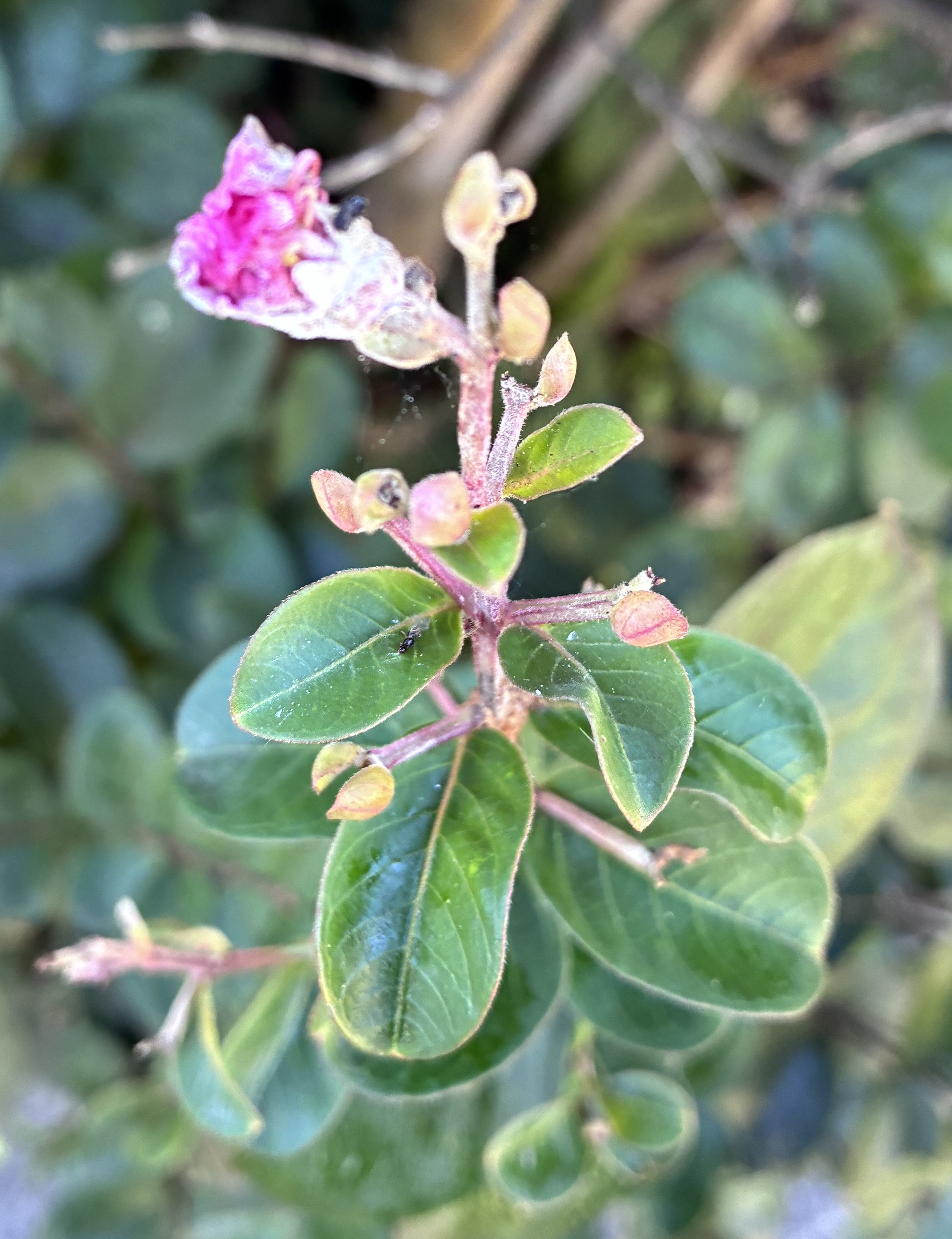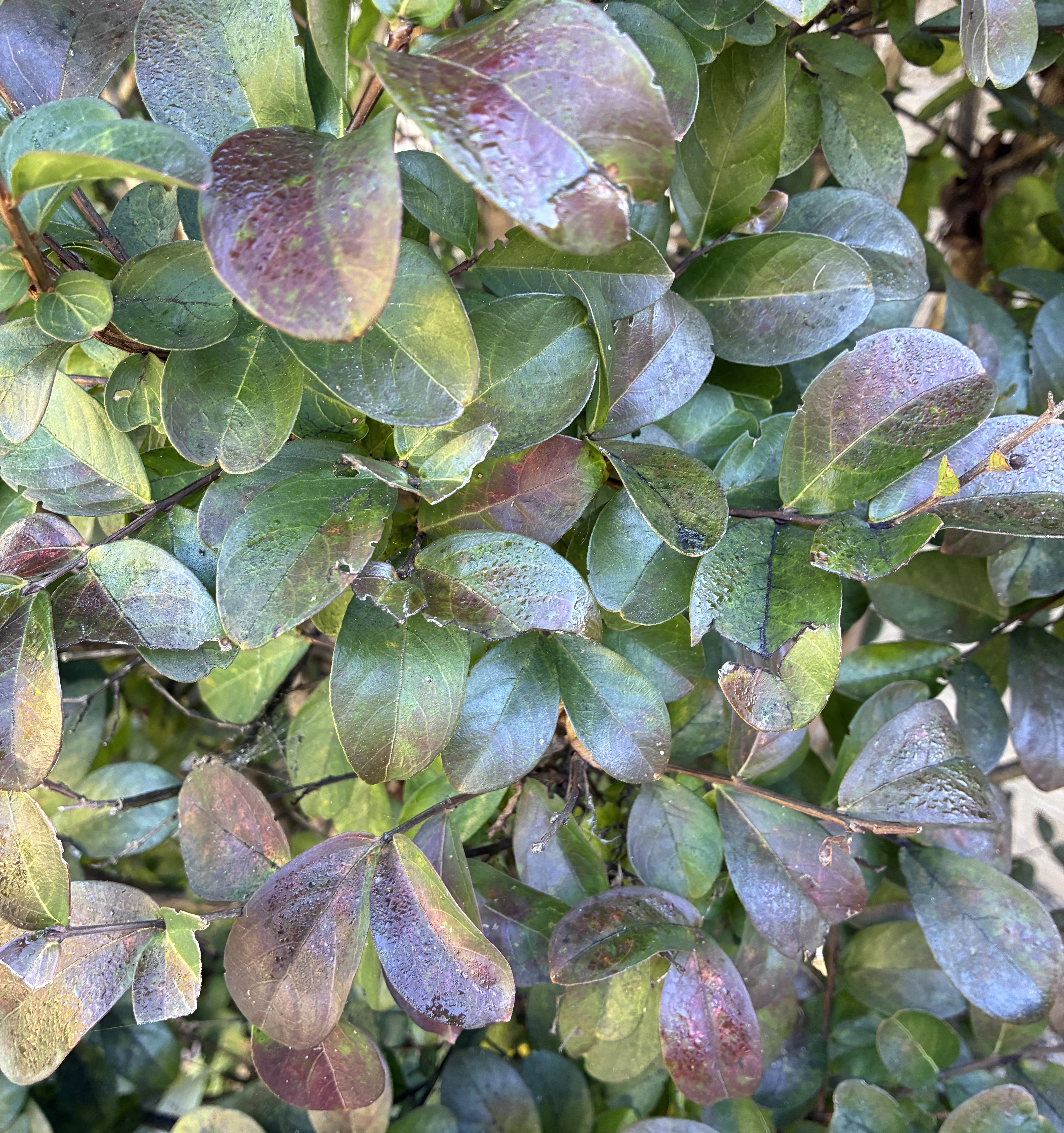
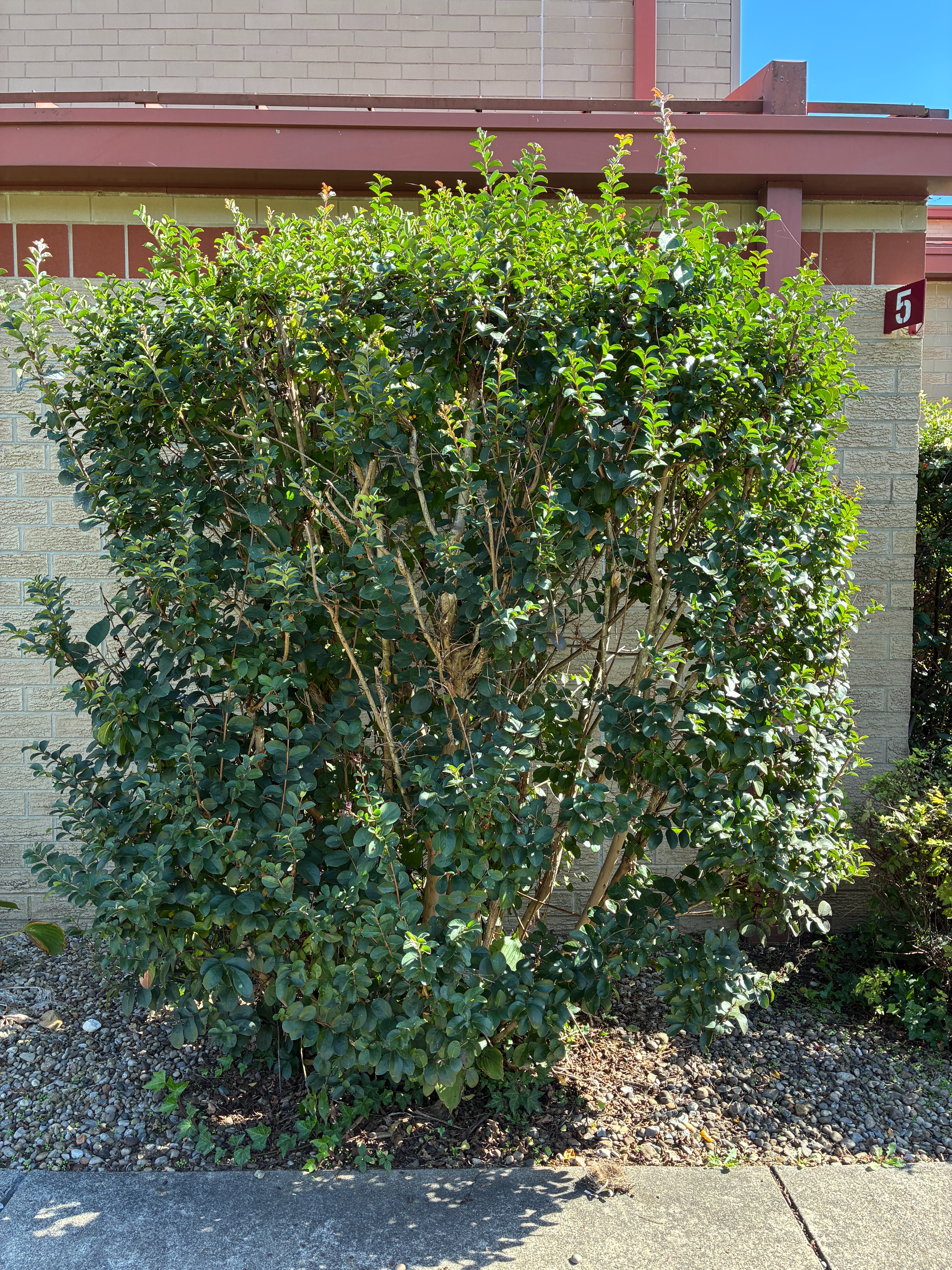
Photo Credits: Dr. Loretta W. Harvey
Scientific Name: Lagerstroemia indica
Common Name: Crepe Myrtle, Crape Myrtle, Lilac of the South
Type: Deciduous shrub
Family: Lythraceae (Loosestrife Family)
Native Range: China, Indochina, Himalayas, Japan
USDA Zone: 7 to 9
Height: 4 to 40 ft
Spread: 4 to 25 feet
Bloom Time: July to September
Bloom Description: Terminal clusters of showy, ruffled flowers with crimped, crêpe-paper-like petals. Colors include white, pink, red, lavender, purple, and mauve. Flowers bloom on new wood.
Sun: Full sun
Water: Prefers moist, well-drained soil, but is quite drought-tolerant once established
Maintenance: Requires pruning to shape and remove dead wood. Benefits from a slow-release fertilizer.
Leaf Type/Shape: Simple, entire margin, oval or elliptical. Emerge light green, matures to dark green.
Attracts: Pollinators (bees, wasps) for nectar and pollen, especially during summer. Birds (cardinals, finches, sparrows) are attracted to the persistent fruit/seed capsules.
Other Info: The smooth, pale gray-pink bark peels in patches, revealing a mottled new bark underneath in shades of tan, cinnamon, or orange, providing excellent winter interest. Highly valued as an ornamental landscape plant for residential, commercial, and street plantings.
Tolerate: Drought, full sun and heat, poor soil (including clay soils), and urban air pollution.
Invasive: Generally not considered invasive in the United States
Climate: Thrives in warm, temperate climates with long, hot summers, which are necessary for vigorous growth and abundant flowering.
Noteworthy Characteristics: Exfoliating Bark: The smooth, pale gray-pink bark peels in patches, revealing a mottled new bark underneath in shades of tan, cinnamon, or orange, providing excellent winter interest. Showy Fall Color: Leaves turn attractive shades of yellow, orange, and red. Extended Bloom Period: One of the longest-blooming small trees available.
Problems: Fungal Diseases: Powdery mildew (common on older cultivars, though many new hybrids are resistant) and fungal leaf spot. Insects: Aphids and scale insects are common, which can lead to sooty mold formation. Winter Injury: In colder zones (5-6), above-ground stems may suffer significant injury or die back to the ground.
Economic Uses: Highly valued as an ornamental landscape plant for residential, commercial, and street plantings. Used as a specimen plant, in groups, for screens/hedges, or in containers (dwarf varieties). Excellent choice for urban and suburban areas due to its tolerance for difficult conditions.
Donated by:
In memory of:
Arboretum Catalog Number: 0012
Photo Credits: Dr. Loretta W. Harvey