
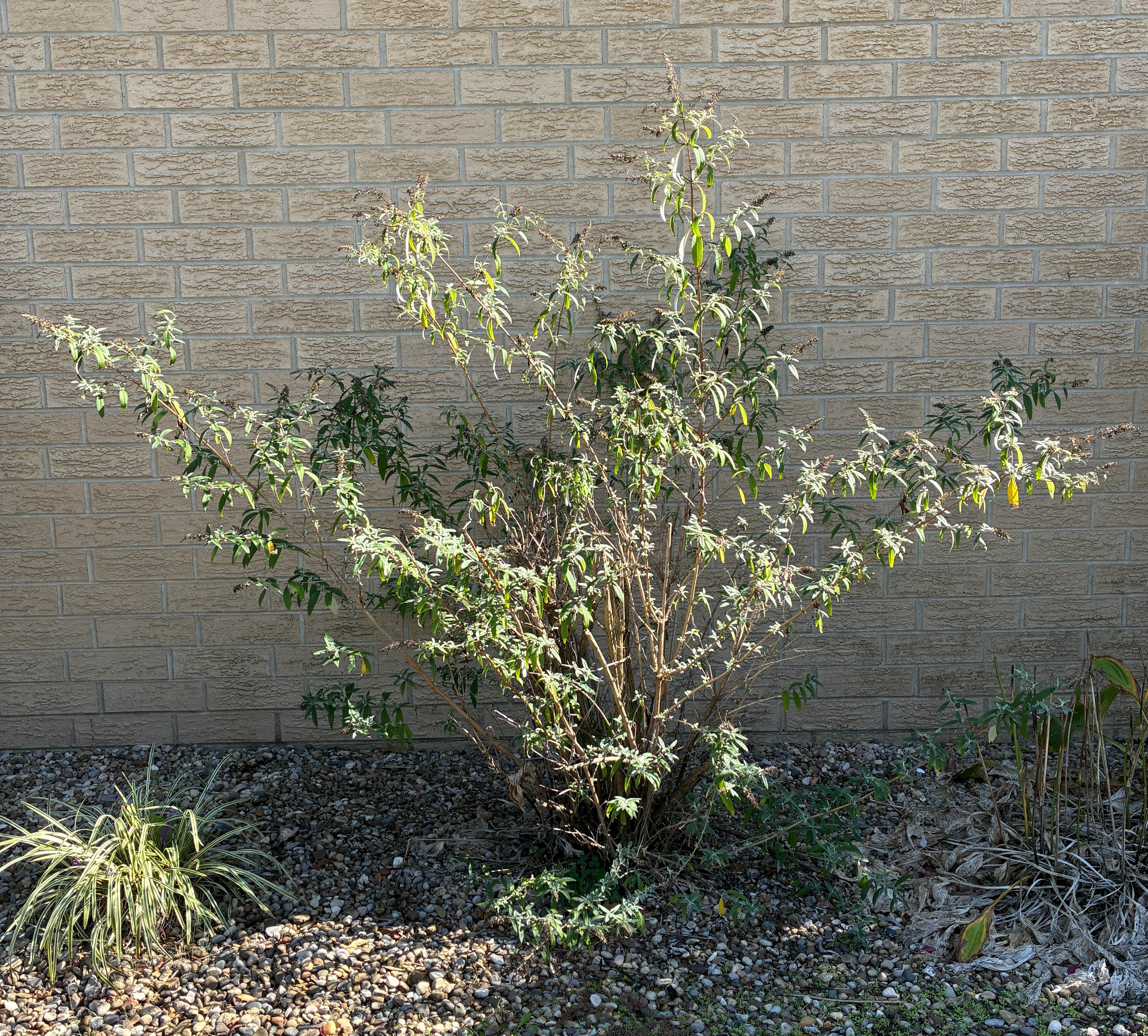
Photo Credits: Dr. Loretta W. Harvey
Scientific Name: Buddleja sp
Common Name: Butterfly Bush, Summer Lilac
Type: Deciduous shrub
Family: Scrophulariaceae (Figwort Family)
Native Range: China, Japan, and Tibet
USDA Zone: 5 to 9
Height: 6 to 12 feet
Spread: 4 to 15 feet
Bloom Time: June to September
Bloom Description: Small, mildly fragrant, tubular, four-petaled flowers densely clustered in showy, spike-like terminal panicles (6-18 inches long), Usually lilac to purple, can be white, pink, or blue. Sun: Full sun
Water: Average, medium moisture, well-drained soil, drought-tolerant once established.
Maintenance: High; pruned severely in late winter/early spring, cutting stems close to the ground, as it flowers on new wood, prompt removal of spent flower spikes is necessary to encourage continuous bloom and to prevent aggressive self-seeding (especially important where the plant is invasive).
Leaf Type/Shape: Opposite, finely toothed, elliptic to lanceolate leaves (3-10 inches long). Sage green to deep green above, with a distinct white-tomentose (fuzzy/woolly) underside.
Attracts: Butterflies (an excellent nectar source), Bees, Hummingbirds, and Moths
Other Info:
Tolerate: Drought (once established), Heat and humidity, Deer
Invasive: Yes, the straight species (Buddleja davidii) is highly invasive in many regions of North America, particularly the Pacific Northwest (Oregon, Washington) and parts of the Eastern United States.
Climate: 5 to 9; Full sun; Average, medium moisture, well-drained soil
Noteworthy Characteristics: Provides excellent color from summer to fall when few other shrubs are in bloom; Mild, honey-like fragrance; A vigorous, fast-growing shrub with an arching habit; Numerous cultivars offer variations in size (dwarf to large) and flower color.
Problems: The single most significant problem for the species is invasiveness; Highly susceptible to root rot in wet, poorly drained, or saturated soils, especially during cold, wet winters; Watch for spider mites, especially in hot, dry conditions; Nematodes can be an issue in the South.
Economic Uses: Primarily used in gardens for its showy, fragrant flowers and ability to attract pollinators (especially butterflies); Popular in borders, cottage gardens, rose gardens, and specifically, & butterfly gardens. Popular for use as fresh cut flowers.
Donated by:
In memory of:
Arboretum Catalog Number: 0011
Photo Credits: Dr. Loretta W. Harvey