Photo Credits: Dr. Loretta W. Harvey
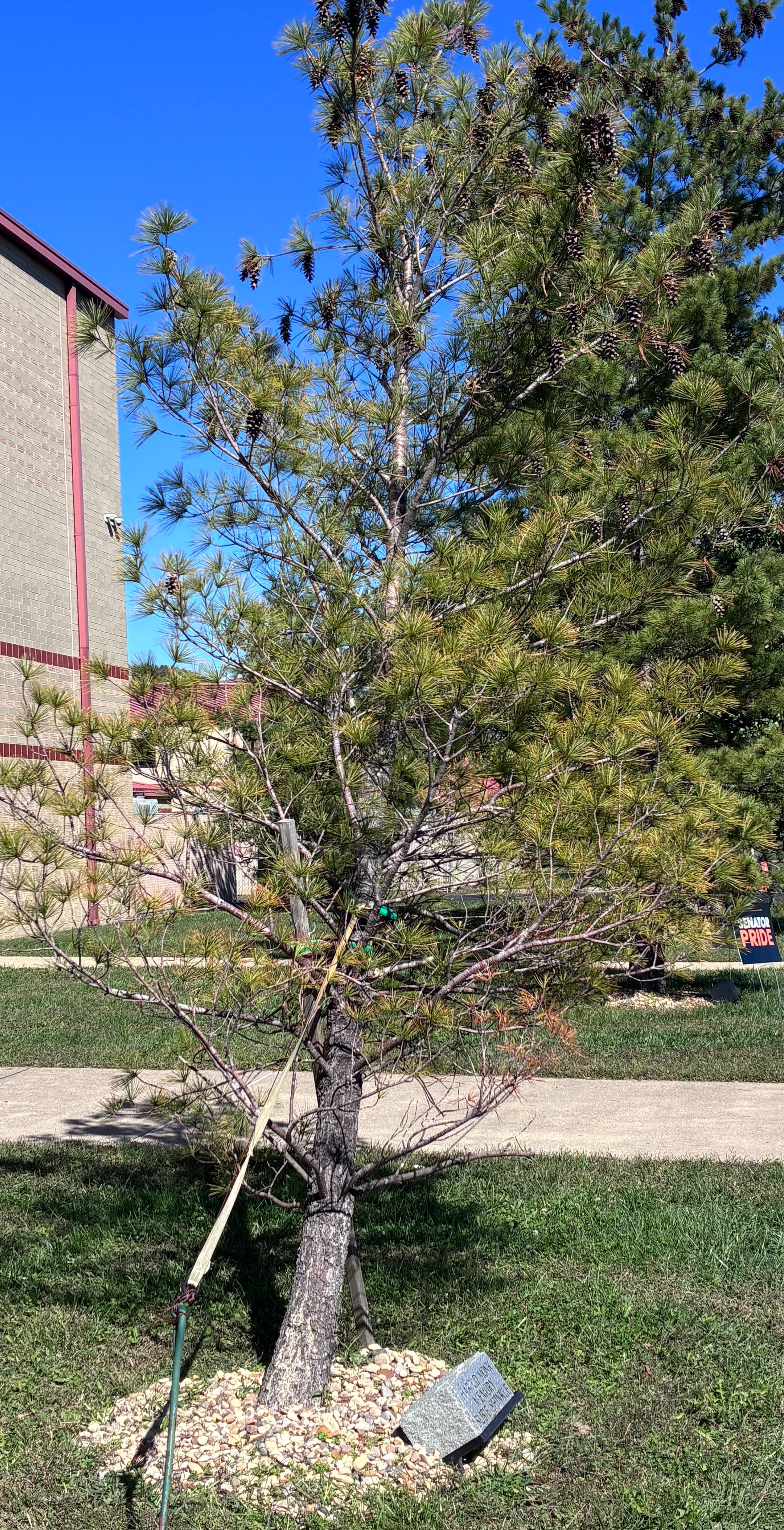
Scientific Name: Pinus strobus
Common Name: Eastern White Pine or Northern White Pine
Type: Evergreen
Family: Pinaceae (Pine family)
Native Range: Eastern North America
USDA Zone: 3-8
Height: 50-80 feet; over 150 feet in the wild
Spread: 20-40 feet
Bloom Time: May-June
Bloom Description: Male cones (pollen-bearing) are small, yellow-brown, and clustered at the base of new growth. Female cones (seed-bearing) are small, pinkish-purple, and located near the tips of upper branches.
Sun: Full sun to partial shade
Water: Medium; best in moist, well-drained soil, but tolerant of some dry conditions once established
Maintenance: Low to moderate. Prune only to remove dead or diseased wood. Young trees benefit from corrective pruning to establish a strong central leader. Sensitive to urban pollutants, de-icing salts, and soil compaction
Leaf Type/Shape: Needles; soft, flexible, 2-4 inches long, and distinctively borne in bundles of five (a key identification feature).
Attracts: Birds (for nesting and cover), various mammals (squirrels eat the seeds), and pollinators (wind-pollinated).
Other Info: The State Tree of Maine and Michigan. Historically, it was crucial for the shipbuilding industry in colonial times, often reserved for the British Royal Navy as mast timber.
Tolerate: Deer (high tolerance), heavy clay soil (moderate tolerance), and dry soil (moderate tolerance).
Invasive: No
Climate: Zones 3-8; tolerates heavy clay soil (moderate tolerance), and dry soil (moderate tolerance). Prefers a cool, humid climate with adequate rainfall. It's adaptable but doesn't thrive in hot, arid conditions or highly exposed, windy sites.
Noteworthy Characteristics: Young trees have a pyramidal shape. Mature trees develop a more irregular, broad, and picturesque crown with long, nearly horizontal branches. Its needles are the softest of all the pines, making it pleasant to touch and easy to distinguish. The cones are long and slender (4-8 inches), often slightly curved, with a smooth appearance. They drop intact. Considered a fast-growing conifer, especially when young (1-2 feet per year).
Problems: White Pine Weevil: The most serious insect pest. Larvae bore into and kill the terminal leader (the main vertical shoot), resulting in a crooked trunk or a multiple-stemmed tree, which severely degrades its timber value and aesthetic form. White Pine Blister Rust: A serious fungal disease that requires an alternate host, typically species of Ribes (currants and gooseberries). Rust causes cankers that girdle and kill branches or the main trunk. Air Pollution: Highly sensitive to sulfur dioxide/ozone, which can cause needle browning (tip-urn).
Economic Uses: Timber: Historically, it was the most important timber tree in the Northeast. The wood is light, soft, straight-grained, easily worked, and dimensionally stable. Used for construction lumber, interior trim, paneling, furniture, and cabinet making. Popular as a specimen tree in large parks and yards, as a screen or windbreak, and in commercial plantations.Numerous cultivars exist, including dwarf and narrow forms. Grown as a popular "choose-and-cut" Christmas tree due to its pleasant aroma and excellent needle retention.
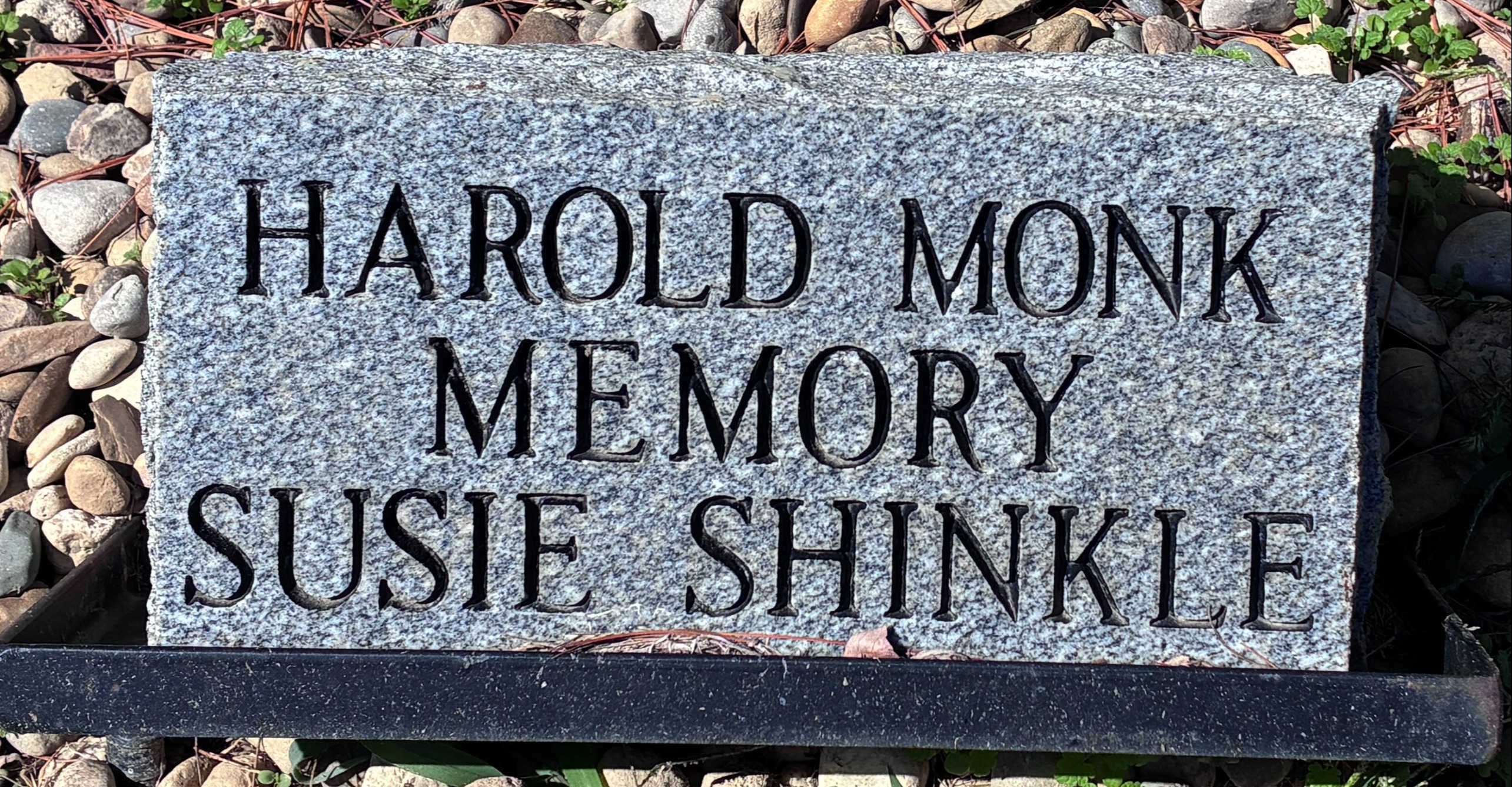
Donated by: Harold Monk
In memory of: Susie Shinkle
Arboretum Catalog Number: 0018-A
Photo Credits: Dr. Loretta W. Harvey