
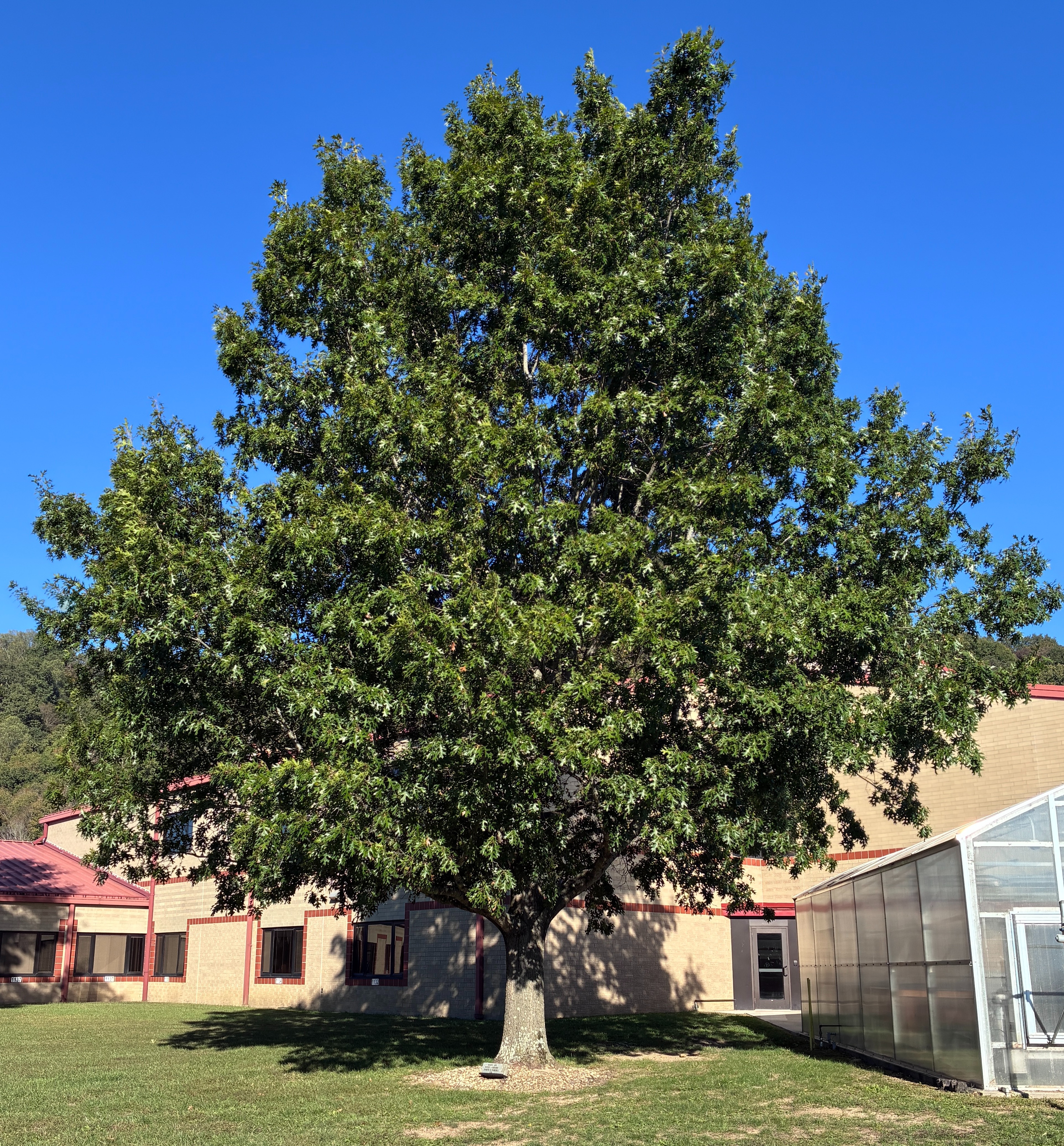
Photo Credits: Dr. Loretta W. Harvey
Scientific Name: Quercus coccinea
Common Name: Scarlet Oak
Type: Deciduous
Family: Fagaceae (Beech family)
Native Range: Eastern and Central United States
USDA Zone: 4-9
Height: 50–70 feet
Spread: 40–50 feet
Bloom Time: April–May
Bloom Description: Male flowers: yellowish-green catkins (tassel-like); female flowers: small, reddish spikes.
Sun: Full sun
Water: Medium; tolerates short dry periods once established, but prefers moist, well-drained, acidic soil.
Maintenance: Low; minimal pruning required, mainly to remove dead or crossing branches.
Leaf Type/Shape: Simple, alternate, deeply lobed (5–9 lobes with bristle tips characteristic of the Red Oak group). Deep sinus cuts, often extending more than halfway to the midvein.
Attracts: Wildlife (squirrels, deer, and various birds that feed on the acorns)
Other Info: Member of the Red Oak section (Lobatae); Acorns take two years to mature.
Tolerate: Drought (once established), poor, dry, and acidic soils, heat.
Invasive: No
Climate: The Scarlet Oak thrives in a temperate climate with cold winters and warm summers. It is best adapted to regions with acidic, well-drained, and somewhat poor or sandy soils, often being a component of oak-pine forests.
Noteworthy Characteristics: The most significant feature is the spectacular, brilliant scarlet red fall foliage, which gives the tree its common name. The color is often one of the best and longest-lasting among the oaks. It also has a handsome, open, and somewhat rounded crown with deep green summer leaves that are glossy on top. The bark on mature trees is dark gray to reddish-brown with shallow fissures, though younger trees have smooth, gray bark.
Problems: Iron Chlorosis: Can occur in high pH (alkaline) soils, leading to yellowing of leaves (interveinal chlorosis) due to the inability to uptake iron. Oak Wilt: Susceptible to this serious fungal disease, especially in the Midwest. Insects: Can be bothered by scale, galls, and borers, though generally not severely in healthy trees. Acorn Litter: Acorn drop can be messy on patios or lawns.
Economic Uses: Lumber: The wood is hard, heavy, and strong, often grouped with Red Oak in the lumber trade. It's used for flooring, furniture, interior trim, veneer, and general construction. Ornamental: Widely planted as a shade tree, specimen tree, or street tree for its desirable form and outstanding fall color. Wildlife: Acorns provide an important food source for various wildlife.
Donated by: Samuel Cook Family
In memory of: Samuel & Florence Cook
Arboretum Catalog Number: 0020
Photo Credits: Dr. Loretta W. Harvey