Photo Credits: Dr. Loretta W. Harvey
Scientific Name: Betula nigra
Common Name: River Birch, Black Birch, Water Birch
Type: Deciduous
Family: Betulaceae (Birch family)
Native Range: Eastern and Central United States
USDA Zone: 4-9
Height: 40 - 70 feet
Spread: 40-60 feet
Bloom Time: March–May
Bloom Description: Inconspicuous; male flowers drooping, yellow catkins 2–3 inches long; female flowers are smaller, upright, greenish catkins.
Sun: Full sun to partial shade
Water: High; prefers consistently moist to wet soils and can tolerate periodic flooding.
Maintenance: Low to moderate; involves removing suckers and training young trees.
Leaf Type/Shape: Alternate, simple, diamond-shaped to oval, 1.5–3 inches long, doubly serrated margins, bright green above, paler and fuzzy below.
Attracts: Birds (American Goldfinch & Pine Siskin feed on seeds); deer (browse foliage); Beavers (use wood).
Other Info: Betula nigra is one of the most heat-tolerant and pest-resistant of the birches, which is a major benefit in warmer climates.
Tolerate: Wet soil, clay soil, heat, humidity, air pollution.
Invasive: No
Climate: Thrives in a wide range of climates but is best adapted to the humid continental and humid subtropical climates found across the eastern United States. Its greatest need is consistent soil moisture.
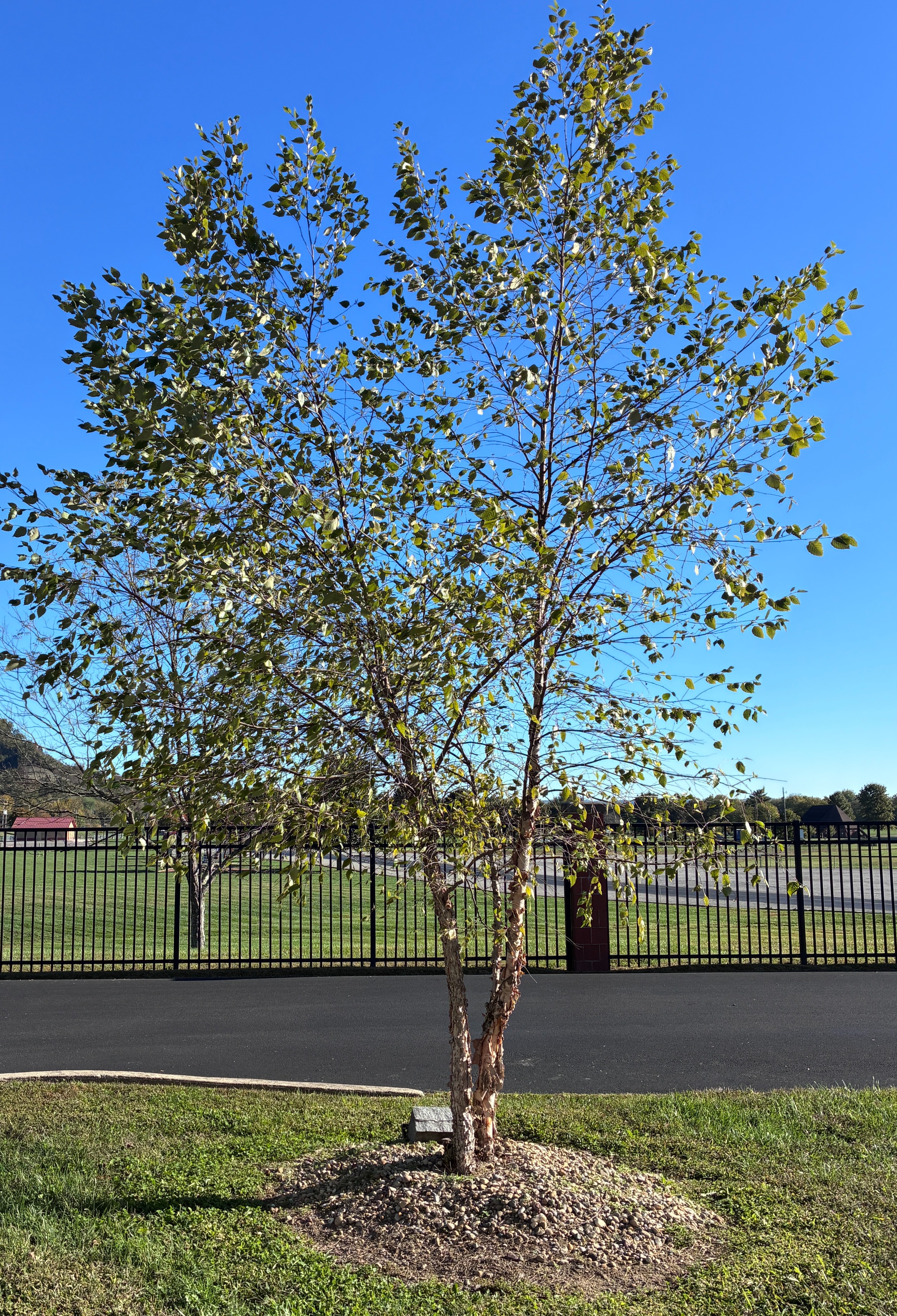
Noteworthy Characteristics: The most distinguishing and sought-after feature is its exfoliating bark . The bark on young trees is pinkish-brown to salmon-pink and peels back in thin, papery curls, revealing inner bark that is cream, tan, or even orange-brown. As the tree matures, the lower trunk's bark becomes thick, rigid, and dark brown or gray, but the exfoliating character often remains evident on the upper branches. It also offers striking yellow fall foliage.
Problems: Chlorosis (Yellowing Leaves): A common issue in alkaline soils due to iron deficiency. Birch Leaf Miner: While more resistant than other birches, it can be occasionally affected. Insects: Susceptible to aphids and Japanese beetles, though typically not severely.
Economic Uses: Erosion control along stream banks and wet areas. Street and park planting due to its heat tolerance and attractive appearance. Rain gardens and areas with poor drainage
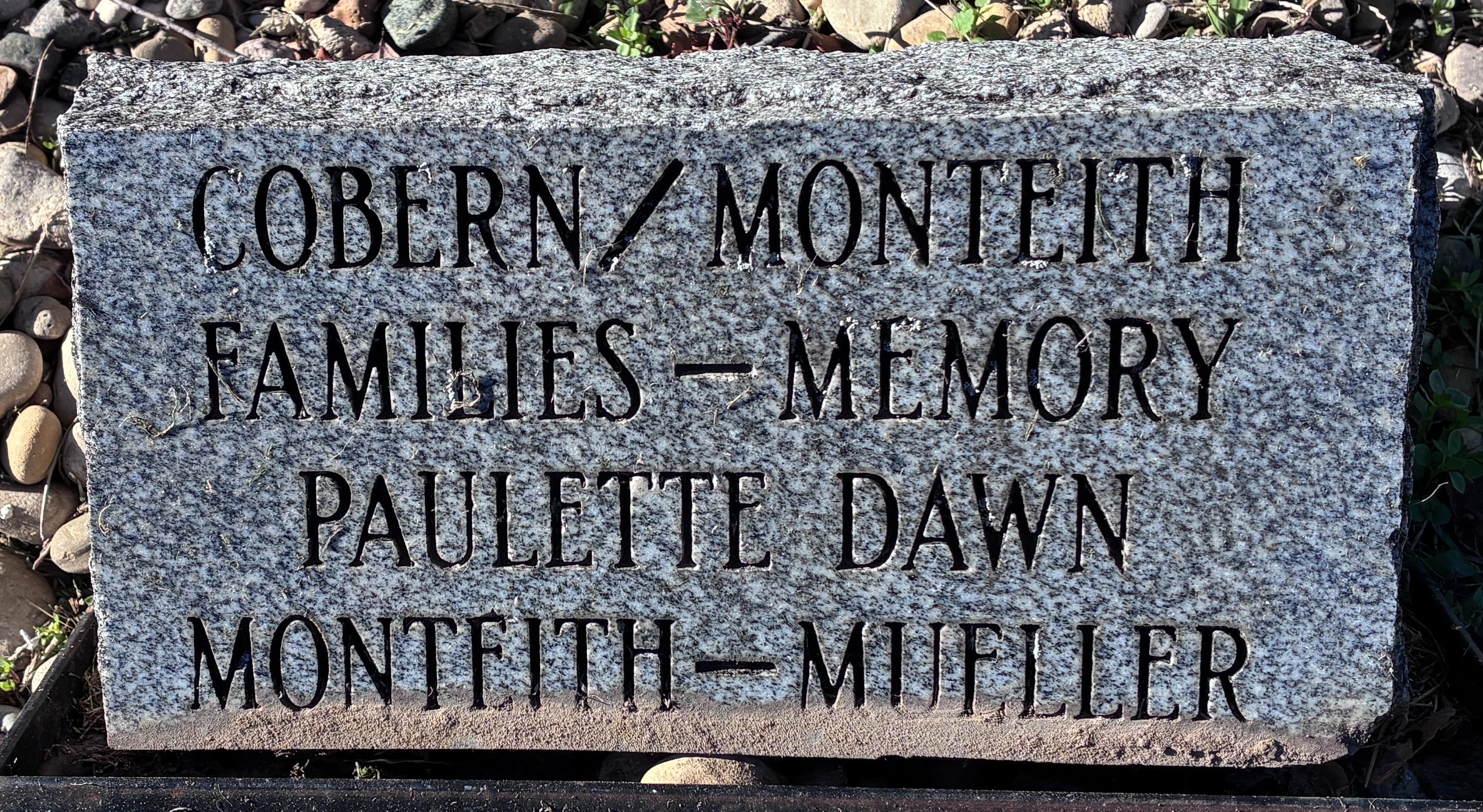
Donated by: Cobern/Monteith Families
In memory of: Paulette Dawn Monteith-Mueller
Arboretum Catalog Number: 0016-B
Photo Credits: Dr. Loretta W. Harvey