Photo Credits: Dr. Loretta W. Harvey
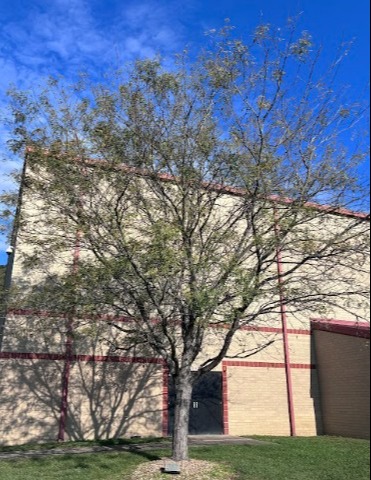
Scientific Name: Gleditsia triacanthos var. inermis
Common Name: Thornless Honey Locust
Type: Deciduous
Family: Fabaceae (Legume/Pea family)
Native Range: Central and Eastern North America
USDA Zone: 3-8
Height: 30-70 feet
Spread: 30-70 feet
Bloom Time: May–June
Bloom Description: Inconspicuous greenish-yellow or greenish-white flowers in drooping spikes; slightly fragrant; not a feature of ornamental value.
Sun: Full sun
Water: Prefers moist, well-drained soil but is very drought-tolerant once established.
Maintenance: Requires structural pruning when young to establish strong central leader and good branch structure.
Leaf Type/Shape: Alternate, pinnately or bipinnately compound. Small, ovate to lanceolate leaflets (0.5 to 1.5 inches long) that cast a delicate, filtered shade .
Attracts: Bees (nectar during bloom); Wildlife (deer, squirrels, and birds may consume the fruiting pods).
Other Info: The species name triacanthos means "three-thorns," and inermis means "unarmed" or "thornless," the trait for which this variety is selected.
Tolerate: Drought, heat, salt spray, clay soil, alkaline soil, and air pollution.
Invasive: No; The species (G. triacanthos) has been reported as invasive in some regions outside its native range (Australia & Argentina). Most commonly planted cultivars of inermis are fruitless/seedless, significantly mitigating any self-seeding concern.
Climate: Extremely adaptable, thriving across a wide range of climates from very cold continental winters (Zone 3) to hot, humid summers. Its exceptional tolerance for drought and urban stress makes it a favorite street tree
Noteworthy Characteristics: The key landscape feature is the tree’s graceful, fine-textured foliage and its high tolerance for difficult urban conditions. The lack of the species’ prominent, hazardous thorns makes this variety safe for landscapes. The fine, compound leaves create a light, dappled shade that allows filtered sunlight to reach and sustain turfgrass beneath the canopy. The small leaflets break down or wash away easily, meaning little to no raking is required in the fall. Reliable and striking golden-yellow fall color.
Problems: Pest Pressure- Susceptible to several pests, most notably Honey Locust Plant Bug, Spider Mites, and Mimosa Webworm, which can cause early defoliation if left unchecked. Vulnerable to Thyronectria Canker on stressed or damaged trees. Pod Gall Midge can cause reddish, pod-like galls on the terminal growing tips, which are unsightly but generally not fatal. Can develop noticeable surface roots in compacted/shallow soils.
Economic Uses: The primary use of the inermis variety is as a premier ornamental and shade tree in urban and residential settings: Widely used in cities due to its tolerance of compacted soil, pollution, and salt. Provides excellent shade while allowing grass to grow beneath it. The wood of the species is hard and durable, used historically for fence posts and furniture, but the commercial value today rests almost entirely on its ornamental qualities. Nearly all commercially available trees are cultivars (e.g., 'Shademaster', 'Skyline', 'Imperial') selected to be both thornless and fruitless, further reducing maintenance.
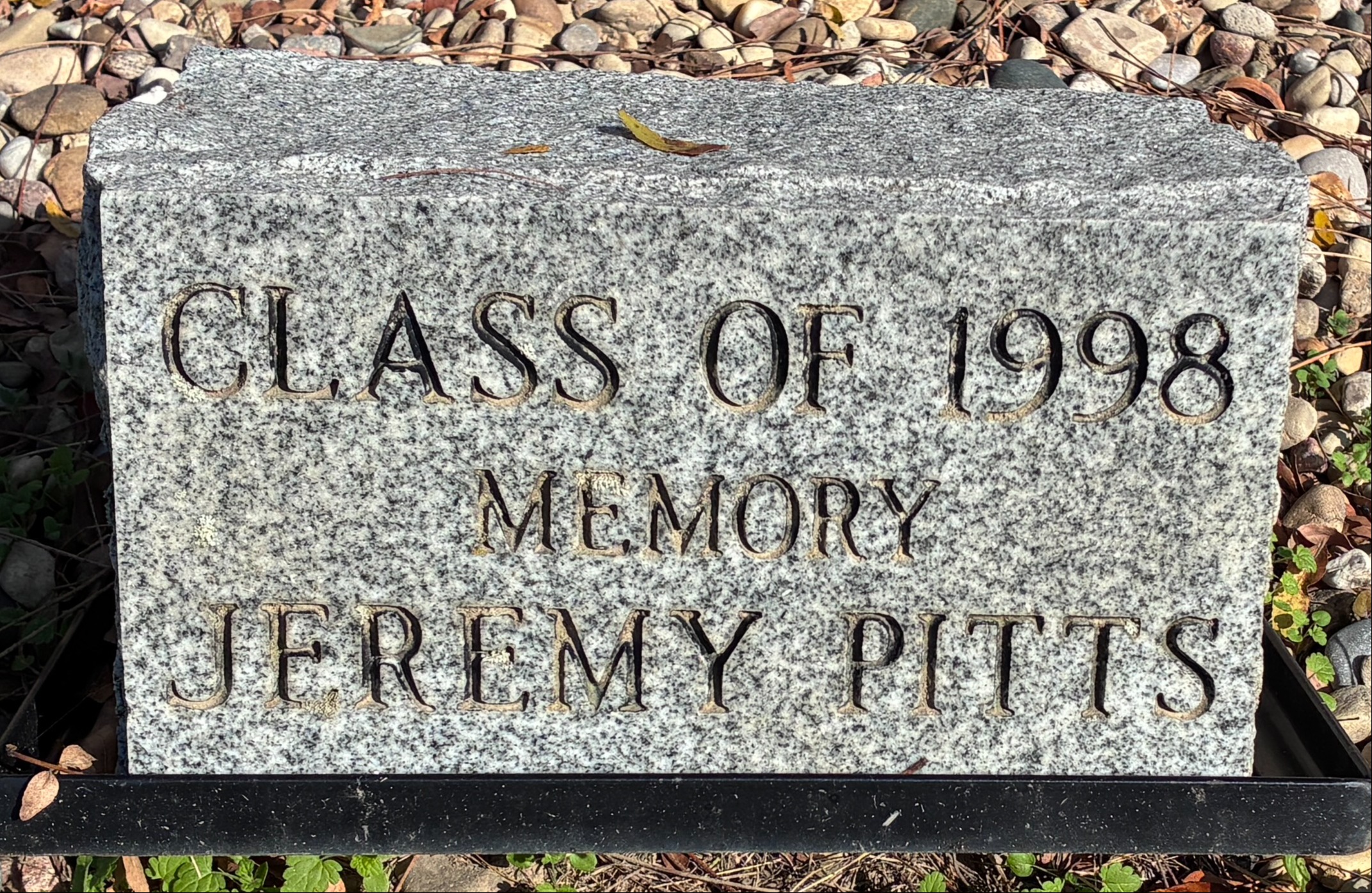
Donated by: Class of 1998
In memory of: Jeremy Pitts
Arboretum Catalog Number: 0017
Photo Credits: Dr. Loretta W. Harvey